
Most training programs fail not because they're too easy, but because they're too relentless. You work hard for twelve weeks, you start seeing results, and then life happens — a cold, a big week at work, a weekend away — and suddenly the thread breaks. You miss a week, then two, and the momentum is gone.
The Montel Cycle is designed to prevent exactly that. Twelve weeks of intentional, progressive training followed by one full week of recovery. Built in. Non-negotiable.
What happens in a recovery week
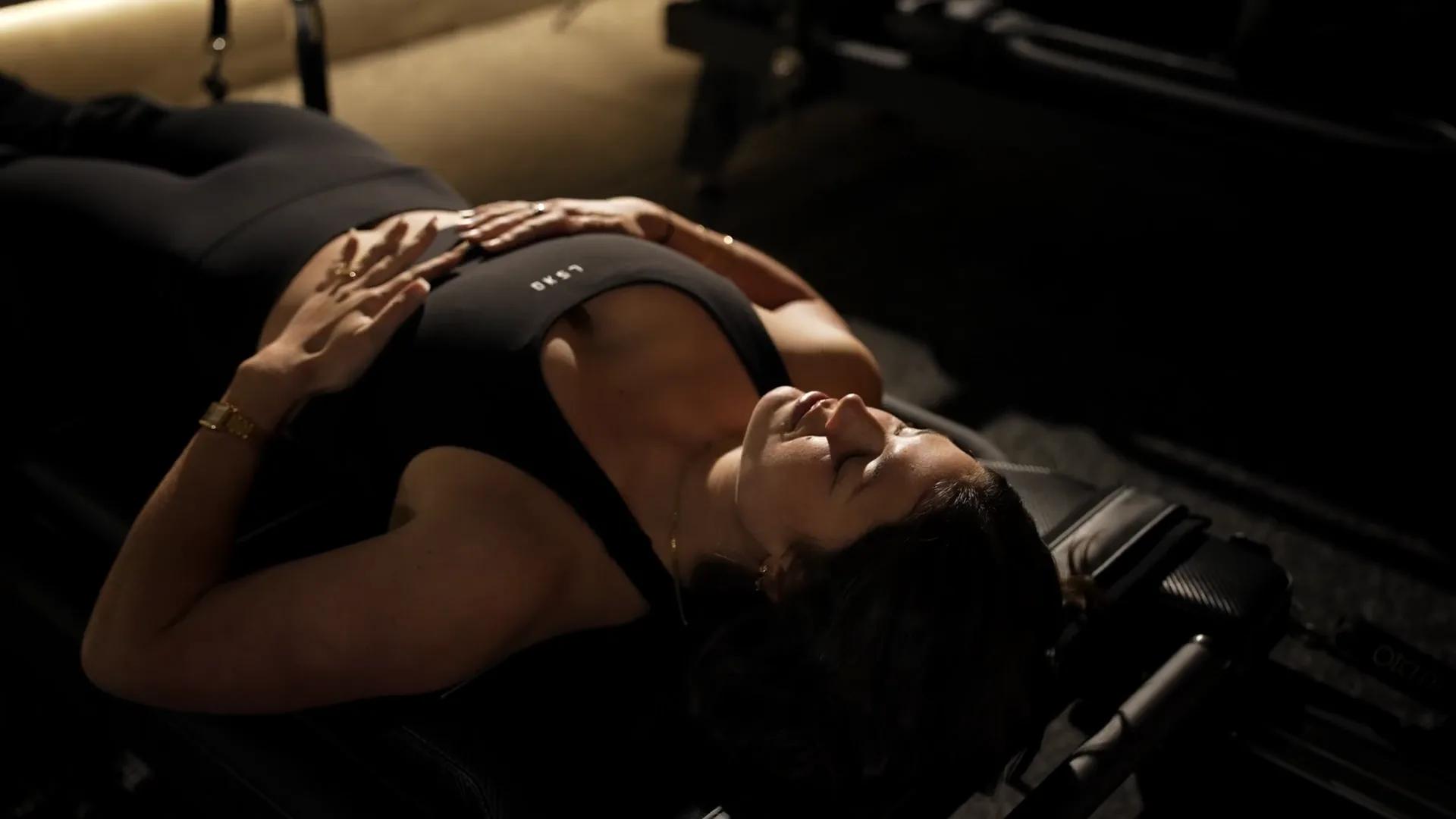
Recovery week isn't a week off — it's a week of different work. Our members still come into the studio, still move, still train. But the focus shifts entirely:
- Lower-intensity mobility and mat-based sessions
- Guided stretching and breathwork
- A reset of the nervous system after twelve weeks of progressive load
- Time in class to catch up with your coach and plan the next cycle
Think of it the way a good athlete thinks about a deload — a planned dip in intensity that lets your body consolidate the gains you've been making and come back stronger.
Why recovery is training
Muscle is built in recovery, not in the session itself. The workout is the stimulus; the recovery is where your body adapts. Over twelve weeks of progressive overload, fatigue accumulates — in the tissues, in the nervous system, and in your motivation. A scheduled recovery week clears that accumulated fatigue so the next cycle can start from a fresh base.
Skip it, and you end up doing what most women do: training hard for eight weeks, burning out, taking two unplanned weeks off, coming back half as strong, and starting over. Over the course of a year, that pattern gets you almost nowhere. Our pattern gets you four full cycles of progression.
Gentle consistency beats intense inconsistency every single time.
What our members say about it
When we first introduced the recovery week, we expected some resistance. What we got instead was quiet relief. A lot of women told us it was the first time a program had given them permission to back off without making them feel like they'd failed. That permission is the point.
Strong for life isn't built in a single twelve-week block. It's built over years of cycles, with recovery weeks in between. That's the work. That's the mission.